The shoulder trades stability for a huge range of motion, so it relies on the rotator cuff and shoulder blade muscles to stay comfortable. When those muscles fall behind what you ask of them, at the gym, at work or in sport, pain usually follows.
What does shoulder pain feel like?
- Pain lifting your arm overhead or out to the side
- Pain lying on the affected side at night
- Weakness or a "catch" partway through a movement
- Stiffness reaching behind your back
- A dull ache on the outside of the upper arm
What usually causes it?
- Overloading the rotator cuff with too much, too soon
- Repetitive overhead work or throwing
- Poor shoulder blade control
- A fall onto an outstretched arm
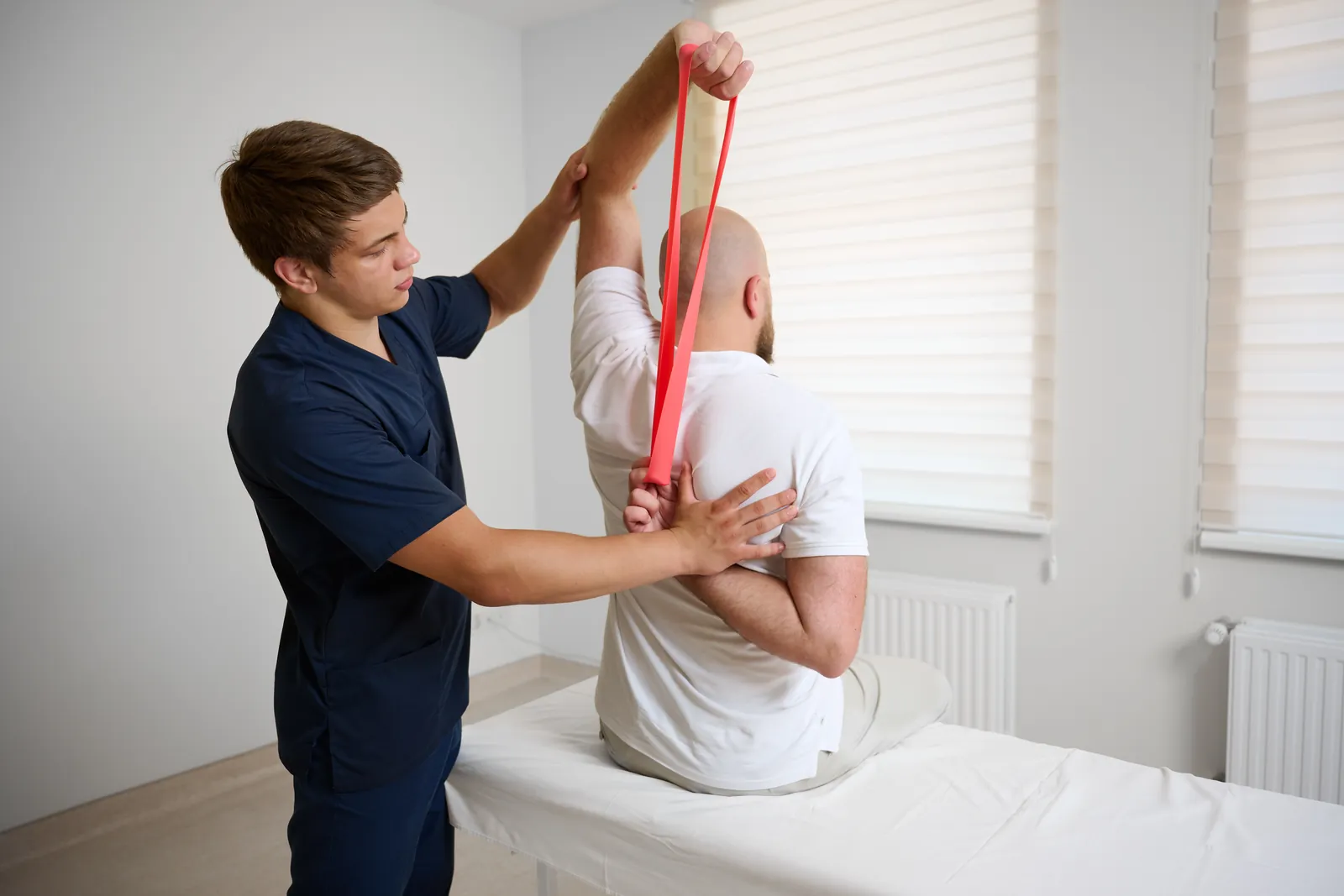
How can physical therapy help?
- Testing strength and range to pinpoint the irritated structure
- Progressive rotator cuff and shoulder blade strengthening
- Joint mobilisation for stiffness
- Dry needling for trigger points around the shoulder
- A gradual return to lifting, throwing or overhead work
When should I get it checked?
Get it checked if shoulder pain is waking you at night, has lasted more than two weeks, or is stopping you from training or working normally.
See a doctor right away if you notice
- Sudden inability to lift the arm after an injury
- A visible deformity after a fall
- Left shoulder or arm pain with chest pain or shortness of breath (call 911)
Questions about shoulder pain
Do rotator cuff tears always need surgery?
No. Many partial and some full-thickness tears do well with a structured strengthening program. Your surgeon and therapist can help you weigh the options.
Should I stop lifting weights?
Usually you modify rather than stop. We adjust the exercises that hurt and keep you training around the problem while it heals.