Most running injuries are not caused by one bad step. They build when training increases faster than your bones, tendons and muscles can adapt. We find the change that tipped things over, usually mileage, pace, hills or a new shoe, and build the strength to handle it, so you get back on the road without losing your season.
Then
“I would get injured often and would not have consistent training because of injuries.”
Now
“…my overall running improved tremendously and was even hit multiple personal records throughout my season.”
What does a running injury feel like?
- Aching along the inner edge of the shin
- Pain around or behind the kneecap on runs or downhills
- Sharp pain on the outside of the knee partway into a run
- Heel, arch or Achilles pain, worst in the morning
- One spot on a bone that hurts to press
What usually causes it?
- Increasing mileage or speed work too quickly
- Adding hills, a new surface or a race block
- Calves, hips or thighs that are not yet strong enough for the distance
- Not eating or sleeping enough to recover from training
How can physical therapy help?
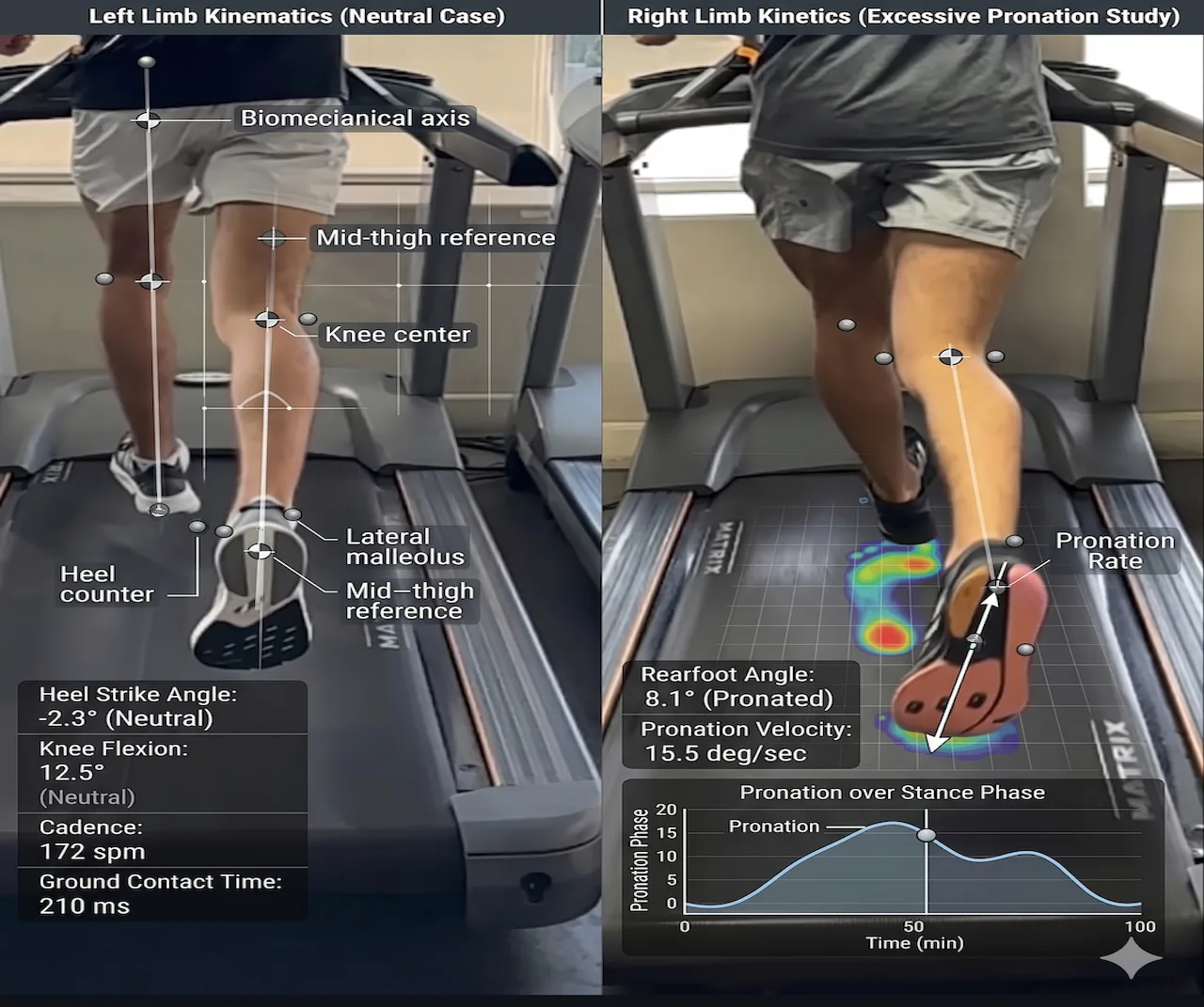
- A running analysis to see how you move at speed
- Strength work for calves, hips and thighs
- A modified training plan so you keep running where possible
- Cadence or form changes when they help your problem
- A graded return to your usual mileage and races
When should I get it checked?
Book an evaluation if pain changes how you run, lasts more than a couple of weeks, or comes back every time you build mileage.
See a doctor right away if you notice
- Pain in one spot on a bone, or pain even at rest (possible stress fracture)
- Pain that makes you limp when walking
- Calf swelling and pain with no injury (possible blood clot)
- Chest pain, fainting or unusual shortness of breath while running (call 911)
Questions about a running injury
Do I have to stop running?
Often not completely. We usually reduce how far, how fast or how often you run and add strength work, rather than stopping altogether.
Is it my shoes?
Sometimes, but rarely the whole story. A sudden switch to a very different shoe can cause problems. The right shoe is usually the one that feels comfortable, and training changes matter more.
Is it shin splints or a stress fracture?
Shin splints cause an ache spread along the inner shin. Pain in one small spot that hurts to press, or pain even at rest, could be a stress fracture and should be checked by a doctor.
Should I change my running form?
Only if it helps your problem. Small changes, such as a slightly quicker step rate, can reduce the load on the knee. We do not chase a perfect form for its own sake.
How do I avoid getting hurt again?
Build mileage gradually, keep strength training through the season and leave room to recover. Most repeat injuries come from going back to full training too quickly.
Do you work with high school and club runners?
Yes: cross-country, track and recreational runners of all ages, including people training for local races.